
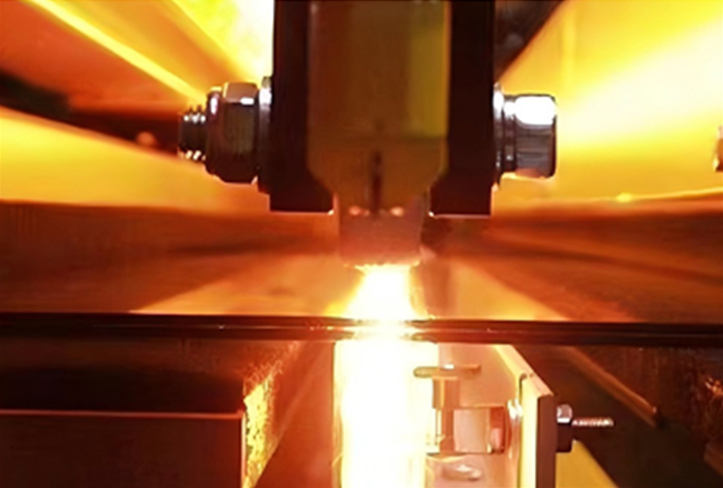
The oven is humming, the glass is moving, and the schedule doesn’t care about your problems. One temperature dip, one zone that’s off, and the whole batch is at risk. Quartz glass heat treatment isn’t some optional add-on—it’s the core of repeatable, high-yield processing. When the heating system can’t hold setpoint across the load, you pay for it in scrap, rework, and missed deliveries. We build quartz heating solutions for what actually happens on the floor: high duty cycles, fast ramps, and steady control that you can count on shift after shift. The goal is straightforward—hit the required thermal profile without adding stress, optical distortion, or process drift.
What actually matters, technically
Quartz heating elements give you fast response and clean heat with minimal convective disturbance. That matters when the process window is tight and the glass is unforgiving.
- Spectrum and response: Short-wave quartz infrared heats quickly and couples well with glass surfaces, so you can ramp fast for tempering and bending without overshoot. Medium-wave quartz penetrates deeper and gives you a broader thermal band—handy for the controlled soaks you need in lamination and annealing.
- Power density and control: Match power density to line speed and glass thickness, and you avoid hot spots and thermal shock. We size the heater array so the controller can hold zone setpoints within tight tolerances, even when the geometry changes from run to run.
- Thermal uniformity: Get the zoned layout and reflector geometry right, and the thermal field evens out. The payoff is consistent temperature across the glass—fewer stress fractures and better optical quality.
- Efficiency and duty cycle: Quartz elements have low thermal mass and heat on demand. That means lower energy use during idle and stable output during long runs, without the lag you get from heavier heating structures.
- Durability under load: Quartz handles high temperatures and rapid cycling. In real life, that translates to fewer replacements, less maintenance downtime, and output that stays steady across shifts.
Why it holds up in real glass processes
Quartz heat treatment earns its keep by matching the demands of specific operations. Tempering: You need uniform heating followed by a controlled quench. If the heating zones drift, the quench can’t make up for it, and surface compression goes out of spec. Short-wave quartz elements deliver fast, repeatable heating, so the quench profile stays consistent. That means fewer rejects and predictable break patterns. Bending: Bending demands a precise thermal profile across the glass to shape it without thinning or wrinkling. Quartz heating gives you tight control over edge and center temperatures, so you get smooth shape transitions and repeatable sag behavior. The geometry comes out consistent, cycle after cycle. Coating drying: Coatings require rapid solvent removal without blistering the surface. Quartz heat dries fast and even, with minimal convection, so the coating cures uniformly. The result is fewer haze defects and a higher first-pass yield. Lamination (EVA/SGP/PVB): Lamination needs a controlled soak to activate the interlayer without edge overflow or bubbles. Medium-wave quartz heating stabilizes the thermal profile, reducing edge effects and keeping the interlayer flowing cleanly. You keep optical clarity and bond strength in spec. Insulating glass sealing: The secondary seal has to cure without overheating the primary seal or distorting the spacer. Quartz heating gives you localized heat that respects the thermal limits of adjacent components, improving seal integrity and cutting down callbacks. Automotive glass and special shapes: When the glass is curved, laminated, or coated, the heating system has to follow the geometry without introducing optical distortion. Quartz heating can be configured in zones and contours that track the part, so quality holds up even on complex shapes.
The practical details you can’t ignore
Quartz heating is solid, but it has real-world constraints you need to plan around.
- Clearances and line of sight: Quartz infrared works best with a clear view to the glass. Keep heaters free of obstructions and maintain proper standoff distances. If shields, fixtures, or hardware block the path, you’ll get temperature drop and nonuniformity.
- Reflectors and maintenance: Reflectors are what put the heat where you need it. Over time, they can dull or oxidize. Make inspection and cleaning part of the routine. A reflector that’s even 10% less reflective can show up as measurable zone drift.
- Control tuning: Fast response means the control loop has to be tuned for the load. When you change glass thickness or line speed, retune the PID or profile to avoid overshoot. A stable controller is what makes the heater array perform the way it was designed.
- Power connections and thermal cycling: Repeated thermal cycles stress connections and supports. Use rated connectors, proper strain relief, and thermal anchoring. Plan for quick-swap mounting so you can replace a zone without shutting down the whole line.
- Compatibility with existing equipment: Quartz heater arrays can be dropped in as replacements for many OEM modules, but mounting dimensions, apertures, and control interfaces vary. Confirm footprint, voltage, and control signals before a retrofit so you don’t get caught with an unplanned stop. If your plant runs tempering, bending, coating, lamination, or insulating glass lines, the heating system is the constraint that sets your yield and throughput. Upgrade to quartz heat treatment when you need faster ramps, tighter control, and fewer surprises. We build it to run shift after shift, and the performance shows up where it counts—on the line.