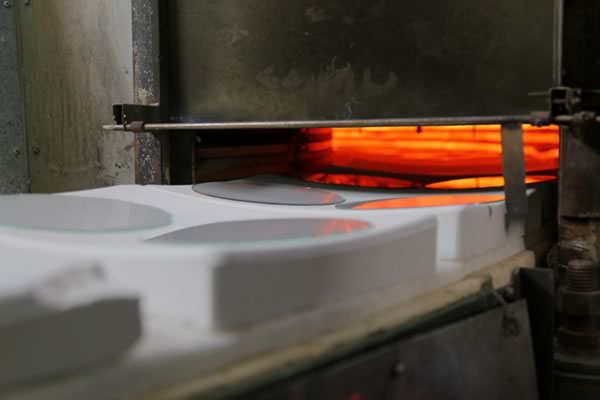
On the line, thin glass doesn’t forgive uneven heat. Hit the sheet with a 0.5 mm variance across the span and you’ll see warp, optical distortion, or a stress fracture that only shows up in final inspection. Convection ovens fight you on response time, and conventional radiant panels get tripped up by emissivity shifts between coated and uncoated surfaces. So we run infrared heating tuned specifically for thin glass. What matters, technically We use short-wave infrared emitters with a fast-rising thermal profile, dumping energy in quickly without soaking the fixture or the surrounding air. Peak wavelength is matched to glass absorption, so the heat lands where it needs to—at the surface—then conducts inward with a minimal gradient. That gives you a tight thermal field that keeps bow and twist in check. Output is adjustable in steps, so you can dial in the curve for 1.1 mm, 2.1 mm, and 3.2 mm without shifting the process window. Why it works in practice In tempering and bending, speed means nothing if you’re bleeding yield. Infrared gets the heat up fast, then holds the setpoint with repeatable uniformity. That translates to fewer scrapped sheets, fewer reworks, and a takt time you can actually plan around. In EVA lamination—automotive and architectural alike—the same fast response shortens the cycle and cuts edge overheat, so optical clarity and edge seal integrity stay consistent. And yes, energy use drops, because you’re heating the glass, not the whole bay. Here’s what to watch for Infrared is line-of-sight, so emitter layout and reflector geometry have to match the part envelope. Reflected heat off IGU spacer frames and tooling can create hot spots if you don’t shield properly. Plan the install with the right emitter spacing, target distance, and clear thermal clearances. Get those details nailed down and the module drops into existing lines without chasing drift.