

Stop Letting Out-of-Stock Parts Kill Your Production
There is nothing worse than a dead production line. You’re staring at a tempering machine that won’t start because some OEM spare part is backordered for weeks. In the world of marine-grade glass, that’s a disaster. You can’t just “wing it” with the heat—precision is everything. That’s where we come in. We don’t make you wait for a branded box to ship from halfway across the world. We build custom shortwave infrared (IR) heating lamps and get them to you in 7 days. Just like that, you’re back in business.
Getting the Heat Right
Marine glass is thick. To get it to that softening point quickly, you need a serious thermal punch. We don’t do “one size fits all.” We look at your specific setup—whether you’re running 230V or 400V—and nail down the exact wattage per millimeter. That’s what actually controls the heat density. But a quick heads-up: if you decide to crank up the wattage for more power, check your wiring and transformers first. You don’t want to find out the hard way that your electrical footprint can’t handle the draw by tripping every breaker in the building.
The Nitty-Gritty: Quartz and Coatings
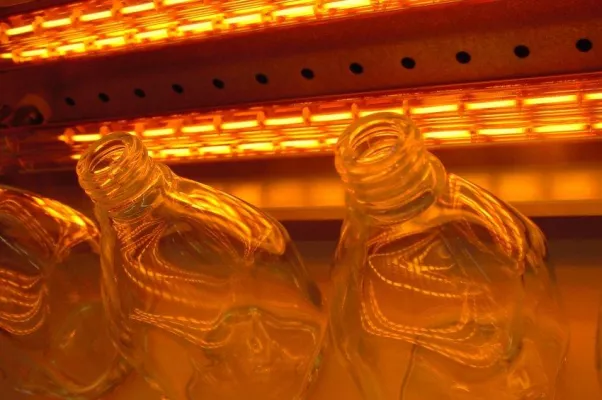
Inside these lamps, we use high-purity quartz to house the tungsten filament. Why? Because tempering ovens are brutal. The thermal shock would shatter cheaper materials. For certain marine jobs, we add specialized coatings to the quartz. Instead of the heat just bouncing off the surface, these coatings push the energy deeper into the glass. It’s the difference between a surface sear and a deep, consistent soak. And don’t worry about the installation. We offer R7s and Sk15 end-caps, so these are true drop-in replacements. You just plug them in. No rewiring, no headaches.
The Trade-off
Switching to these custom lamps cuts your downtime from weeks to a few days. They fit right into your existing array without any fuss. Just keep one thing in mind: these high-intensity lamps put out a massive amount of radiant heat. Make sure your cooling fans are humming and your shielding is tight. You don’t want your chassis warping because the oven is running hotter than it used to.