

Stop Fighting With Your IR Lamps
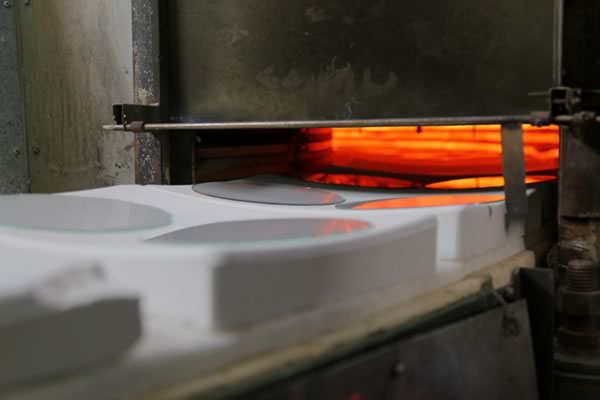
Most off-the-shelf infrared lamps are just… boring. They give you uniform heat across the board. But if you’re in the middle of glass R&D, uniform heat is usually the last thing you actually want. When you’re testing how a new glass composition handles thermal shock, you need tension. You need gradients. You need one spot to be screaming hot while another stays relatively cool.
It’s Not Just About the Size
A lot of suppliers will tell you they do “custom work,” but then they just change the length of the quartz tube and call it a day. That’s not really customization; that’s just resizing. We do things differently. We look at thepower density. By messing with the filament winding or tweaking the voltage drop in certain sections, we can build “hot zones” and “cool zones” right into a single lamp. Imagine you need the center of your substrate to ramp up fast, but you want the edges to just soak in the heat slowly. We can actually build that profile into the wattage. It turns the lamp into a tool that fits your specific stress test, rather than you trying to force your experiment to fit the lamp.
The Trade-off (The Part Nobody Tells You)
Here is the catch: short wave IR is great because it digs deep into thick-walled glass. But when you cram that much power into a small space, the lamp ends take a beating. If we crank up the density to help you speed up your R&D cycles, your housing has to be ready for it. If your ventilation around the electrodes is sloppy, your lamps are going to burn out way too fast. **Pro tip:**Make sure your cooling fan’s CFM matches the total wattage of your array. Otherwise, you’re just asking for the quartz to warp.
Lab-Scale Freedom
We get that lab setups are often a bit of a puzzle. Maybe you have a specific power supply you’re stuck with, or a tiny footprint that requires a weird connector. We build to your schematic. Period. The goal is to give you a precision instrument that just works, so you can stop guessing why your thermal analysis is off and actually start trusting your data.