


Stop Guessing with Your Glass: Fixing Batch Variance
If you’ve ever run a batch of CNC glass cutting, you know the frustration. You’re staring at those stress patterns and wondering why some sheets come out perfect while others just… snap. Or worse, they warp while they’re cooling. It’s a nightmare. Most of the time, it comes down to one thing: your heat isn’t hitting the glass evenly.
The problem with “standard” heat
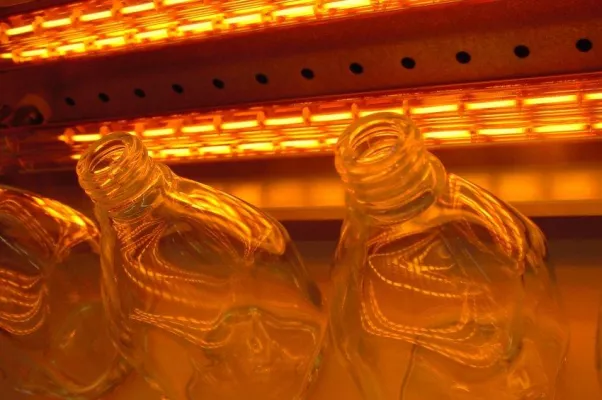
Here is the thing about IR lamps. Most shops just throw in standard ones, but they aren’t all created equal. Think about it. If one lamp is pushing 1200W and the one right next to it is only doing 1100W, you’ve just baked a temperature gradient right into your workpiece. The glass expands differently in different spots, and that’s where the trouble starts. We handle this by obsessing over the small stuff—the quartz purity and the filament density. We make sure the wattage doesn’t drift between units. The goal is simple: every single square inch of that glass needs to hit the target temperature at the exact same time. No hot spots, no cold gaps.
Getting the heat in fast
You want the glass hot, but you don’t want to melt your CNC frame. That’s why we use short-wave infrared. It doesn’t just sit on the surface; it penetrates the glass much faster than long-wave heat. It means you spend less time staring at a timer waiting for the glass to “soak” and more time actually cutting. Just a heads-up on the setup: when you cram that much power into a small space, things get hot.**Really hot.**If you’re wiring up a bank of these, double-check your cooling fans. If they aren’t spec’d for the heat rise, you’re going to fry your control electronics. And nobody wants that.
Why this actually matters for your day
When the heat is uniform, the stress relief is uniform. Everything just becomes predictable. You can stop second-guessing your feed rates or crossing your fingers every time you start a new run. Whether it’s the very first sheet of the morning or the hundredth one before you head home, the result is the same. It just works.